
Why High-Quality Lab Furniture Is a Smart Investment for Modern Laboratories?
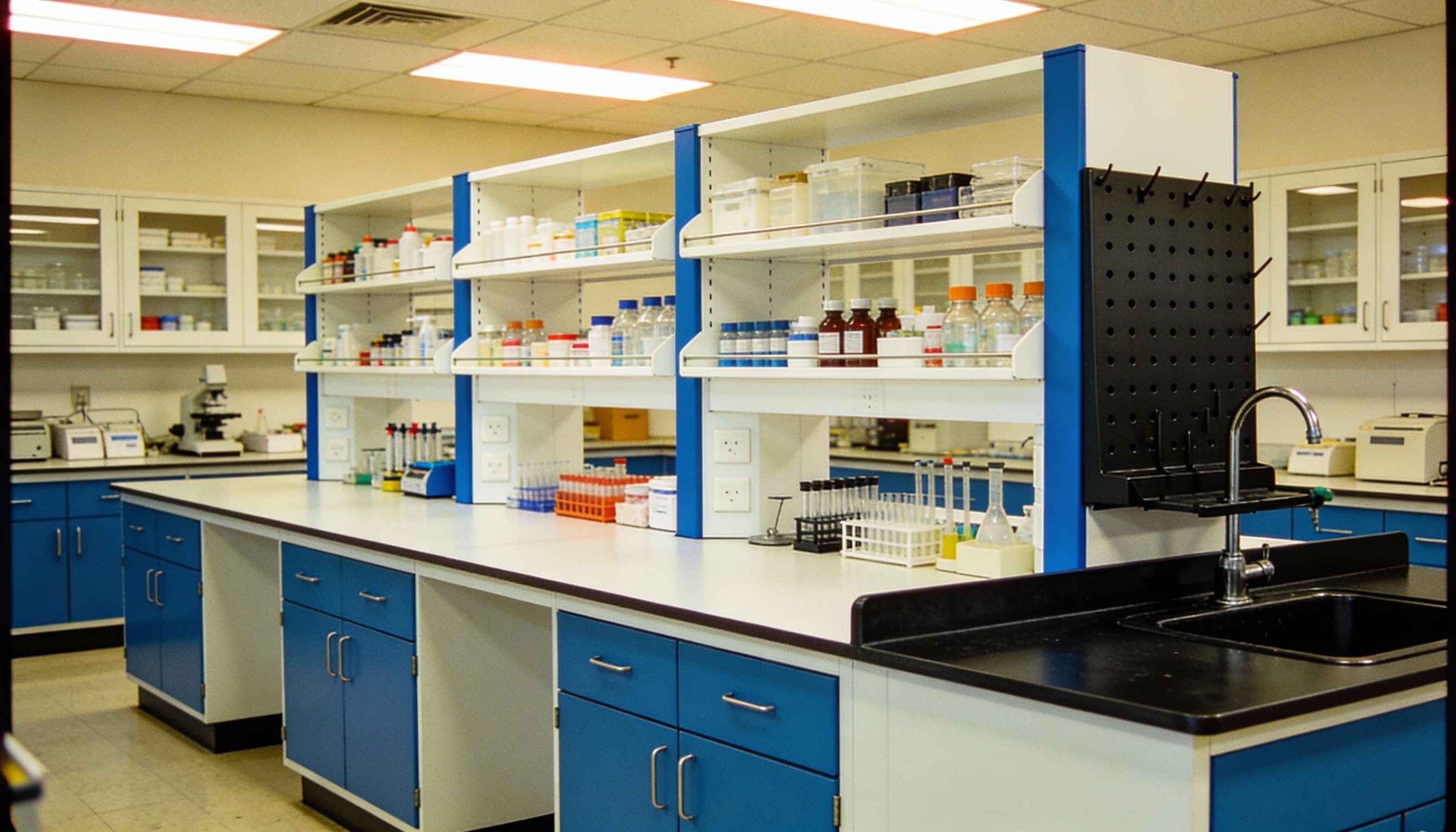
Laboratories these days are not mere blank places with benches and equipment. They are all concerned with accuracy, safety, economy, and being adaptable. Whether it is a research center, a test location, a school laboratory, or an industrial facility, it all falls down to what is inside that location. The crazy thing is that laboratory furniture is giant in that mash up yet people do not even think about how big the role of a piece of furnishings can be.
Choosing good furniture is not simply about appearance and comfort. It concerns the long-term performance, the compliance with regulations, the safety of everyone, as well as the smooth operation of the lab. Intelligent laboratories understand that purchasing the correct items is a prospective plan rather than an investment. Companies such as Shelves Tech come up with designs of furniture that meet the requirements of the labs at the current time and in the future, hence operating without hitches.
Laboratory Furniture in Current Scientific Setups
There is monotony of work, sensitive equipment, exposure to chemicals, and twenty-four-hour shifts in lab work. In case the furniture is designed badly, it will easily form a bottleneck. Premier laboratories should have furniture that promotes individuals as well as equipment and remains safe and efficient.
Quality lab setups focus on:
- Chemical-resistant and stable working surfaces
- The work height and seating is ergonomically designed
- Flexible design that can be modified to suit emerging research requirements
- Hardy materials that can withstand the daily demand
The workstations in a large number of the laboratories also require the facility of having a fume hood, hence they are supposed to be robust and they should also fit well. Proper designing of furniture enhances efficiency, minimizes errors, and made the lab less dangerous.
Why Lasting Performance is Better than the First Price
One such myth is thatis the one that cheaper furniture is more economical. Actually, low-grade stuff goes out of shape quickly, requires constant repair work and sometimes cannot even be safe. In the long term the concealed costs outweigh initial savings by far.
Laboratory tables and designs of high quality are constructed to endure incessant chemical exposure, moisture, heat and mechanical stress. They are reinforced, tough-jointed, and have special finishes that provide a long and faithful service even in strenuous conditions.
Long-term sustainability benefits are:
- Fewer replacements
- Lower maintenance bills
- Stable performance performance after performance
- Lean workflow interruptions
In the case of labs intending to grow sustainably, durability does not need to be an additional cost but a financial windfall.
Ergonomics and Safety: Securing the Science behind the People
Lab technologists are usually working long hours and need comfort and posture. Poor ergonomics cause fatigue and repetitive strain injuries and slower performance, which creates disarrays accuracy and output.
Good posture and reduced physical strain are maintained by well-designed laboratory stools and workstations. The adjustable seats, solid base and appropriate height enable the user to work comfortably in various tasks and bench arrangements. This is particularly necessary around a laboratory hood where good posture is necessary in order to handle safely.
The major ergonomic and safety benefits are:
- Able to perceive long experiments clearly
- Reduced chances of muscle-bone issues
- Excellent equilibrium and stability
- Reduced compliance with safety regulations
With the emphasis on ergonomic furniture, laboratories are safeguarding their greatest resource of all their human capital.
Smart Furniture Design as a Way of Optimizing Workflow
A fantastic laboratory design does not occur by chance. The location of tools, the distance between the benches, the placement of equipment, and so on influence the speed at which the work should get done. Furniture that is carefully crafted eliminates redundant motion and allows individuals to complete the work more quickly and imprecisely.
Lab furniture systems of high quality support:
- Tools and supplies are well stored
- Designated areas of work
- Quick access to the most frequently used gear
- A tidy and organized vibe
Whenever the tables and safety systems such as fume hoods have been located in a balanced manner, daily tasks can flow better, become safer, and simpler.
Scalability in Expanding and Developing Labs
Labs rarely stay static. There is a change in research priorities, the teams are expanded and new means emerge. The set pieces of furniture become confining soon.
The modern manufacturers are concerned with the modular and customizable solutions which allow labs to rearrange without significant renovations.
Flexible furniture systems have the following advantages:
- Unchallenging expansion or re-organization
- Improved fit of new equipment
- Long‑term scalability
- Smarter space use
Shelves Tech also creates furniture that is flexible enough to allow labs to remain flexible even in the future, rather than being tied to previous designs.
Adherence and Quality Norms are not a Thing to Ignore
Laboratories are subject to rigid safety and regulatory systems. The furniture that is not meeting the industry standards may cause compliance, audit or operational risks.
Professional makers make sure that their products meet such crucial specifications as:
- Load‑bearing capacity
- Chemical resistance
- Fire safety
- Structural stability
This is essential in the case of gear that holds systems such as a fume hood where safety and compliance are not subject to compromise.
Comparison: High-Quality Lab Furniture VS Low-Quality
|
Aspect |
Low-Quality Furniture |
High-Quality Furniture |
|
Durability |
Wears out quickly |
Long-lasting and robust |
|
Safety |
Limited stability |
Enhanced safety features |
|
Ergonomics |
Poor user comfort |
Designed for long work hours |
|
Maintenance |
Frequent repairs |
Minimal upkeep required |
|
Adaptability |
Fixed design |
Modular and flexible |
|
Long-Term Cost |
Higher over time |
Cost-effective investment |
This comparison clearly shows why quality should always outweigh short-term savings when planning a laboratory setup.
Social Responsibility and Sustainability
The aspect of sustainability is prominent in all the industries such as the labs. The use of long-lasting furniture is an investment that reduces wastage and minimizes environmental effects of frequent changes.
Many modern makers focus on:
- Efficient material use
- Long product life cycles
- Decreased amount of resources used
The selection of good furniture is a contributing factor to the efficiency of operations, as well as a responsible long-term planning.
Why Shelves Tech is a Reliable Best Buy
Shelves Tech is a provider of lab furniture that is designed to meet the requirements of the times. Their product can offer durability, safety, flexibility, and comfort in all of the laboratory environments, such as classrooms and professional systems, which can be fully integrated with the safety systems, such as fume hoods.
Shelves Tech focuses on high-quality materials and utility and assists laboratories to develop the space that advances accuracy, creativity, and effectiveness.
An Academic Lab Setting Cultivates Trust
Aesthetics and design of a lab influence the perception of researchers, clients, students and regulators. Quality furniture enhances professionalism of a lab and helps to gain confidence in its functioning.
Strong finishes, clean lines, well-integrated workstations and correctly placed tables make the setting seem accurate, disciplined and dependable.
Final Thoughts
Acquiring quality Laboratory furniture is not a purchase anymore, but an intelligent strategy that would define how the lab would look like tomorrow. Whether it is the years of life of lab tables and laboratory stools or the equipment produced by experienced craftsmen, the correct decisions raise the level of safety, output, and ultimate worth. To expand and thrive, stay on track and operate efficiently, the choice of furniture is everything in a lab.
FAQS
Q1. What is laboratory furniture?
Laboratory furniture includes specially designed workstations, storage units, and seating used in labs to support safe, organized, and efficient scientific work. It is built to handle chemicals, equipment weight, and daily lab use.
Q2. What material is used for lab furniture?
Lab furniture is usually made from materials like mild steel, stainless steel, epoxy resin, and chemical-resistant laminates to ensure strength, durability, and safety in laboratory environments.
Q3. What is a laboratory table called?
A laboratory table is commonly known as a lab bench or lab table, designed to provide a stable and resistant surface for experiments and equipment handling.
Q4. What equipment is used in a lab?
Laboratories use equipment such as work benches, storage cabinets, safety systems like a fume hood, measuring instruments, and ergonomic seating, depending on the type of work being performed.